Shrimp Lo Mein With Hoisin Sauce and Chinese Five Spice

Juicy shrimp, egg noodles, and crisp vegetables tossed in a hoisin and five-spice sauce. One pan, under 20 minutes, and a lo mein that beats any takeout version you’ve tried.
This post may contain affiliate links. Please check our disclosure policy.
Shrimp Lo Mein
Shrimp Lo mein is one of those takeout orders I used to place on autopilot because I love the combo of noodles and shrimp. Then I tried making it and realized the whole thing comes together faster than waiting for delivery. Plus, I can always tweak the taste to my liking.
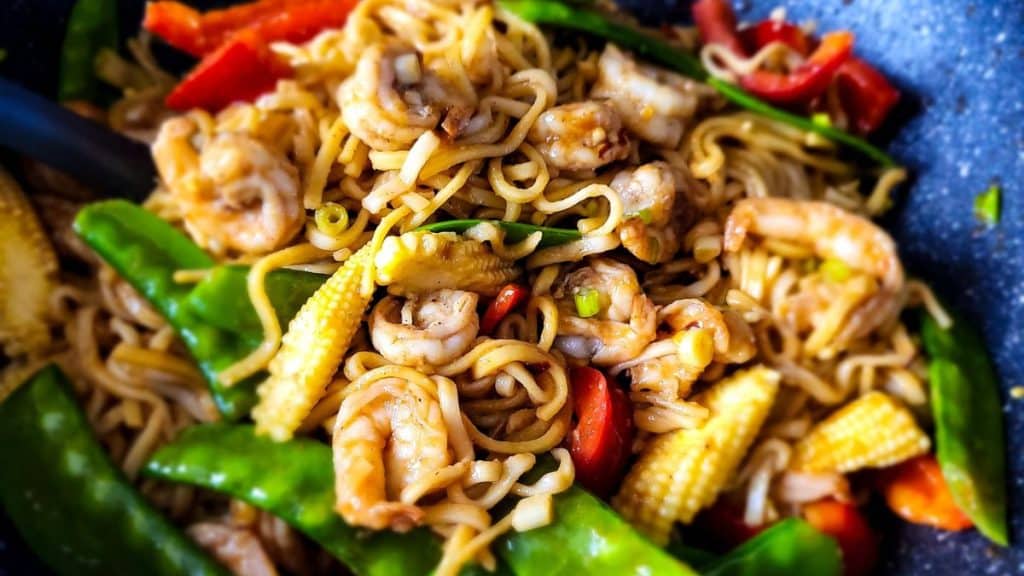
I make this noodles-and-shrimp combo with a hoisin sauce and a Chinese five-spice base that gives the noodles a sweet, fragrant depth you don’t get from a plain soy sauce stir-fry.
Funny thing is, I didn’t know until I started digging into it: “lo mein” literally translates to “tossed noodles,” and that’s exactly what separates it from chow mein. Instead of frying the noodles crispy, you boil them first, then toss them through the sauce so they turn soft, glossy, and completely coated in all that spiced sauce.
So it’s similar to Indonesian mie goreng, really. Mind you, all noodles in the world originate from Chinese noodles anyway. It all makes sense if we find similarities in them.
Why You’ll Love This Recipe
- Shrimp cook in under three minutes. This is the fastest protein to add to a stir-fry. Two to three minutes in a hot pan and they’re done, which means the whole dish is genuinely on the table in under twenty minutes once the noodles are boiled.
- The vegetable combination is practical and purposeful. Baby sweet corn adds crunch and a mild sweetness. Snow peas stay crisp even after a few minutes in the pan. Red bell pepper adds color and a slight freshness. All three hold their texture in a hot stir-fry without going limp.
- One pan beyond the noodle pot. The shrimp, vegetables, and sauce all go through a single skillet in sequence. Minimal washing up for a dish that tastes like considerably more effort than it was.
- Faster than ordering takeout. From putting water on to boil to plating the finished lo mein takes under twenty minutes. That’s before a delivery app has even confirmed your order.
- Easily scaled for more people. Double the noodles, shrimp, and vegetables — the sauce scales proportionally. This recipe serves two comfortably, but you can easily multiply it as needed.
- Works as a complete meal with no sides needed. Protein, vegetables, and noodles in one pan. Nothing else is required.
Ingredients You Need
- 2 nests of egg noodles (approximately 6 oz / 170g)
- 6 oz / 170g raw large shrimp, deveined
- 4 baby sweet corns
- 1 cup snow peas (mangetout)
- ½ red bell pepper, sliced
- 1 scallion (spring onion), sliced
- 2 tablespoons of frying oil
- 1 tablespoon garlic paste
- 2 tablespoons hoisin sauce
- 1 teaspoon Chinese five-spice
- 1 tablespoon light soy sauce
How to Make Shrimp Lo Mein
- Cook the noodles according to the package instructions. Drain and set aside.
- Build the flavor base by heating the oil in a skillet or wok over medium heat. Add the garlic paste and fry until fragrant — about 30 seconds, stirring constantly.
- Add the five spice and stir well to combine with the garlic. Cook for another 30 seconds.
- Cook the shrimp by adding them to the pan and stirring through the garlic and spice base. Cook for 2–3 minutes until the shrimp just turn opaque and pink. Do not overcook — they will continue to cook when the other ingredients are added.
- Add the hoisin sauce and stir to coat the shrimp evenly.
- Add the vegetables — baby sweet corn, snow peas, and red bell pepper — and stir-fry for 2–3 minutes until slightly softened but still with crunch.
- Add the soy sauce and stir through the pan.
- Toss in the noodles and mix everything together carefully until the noodles are evenly coated in the sauce and heated through.
- Finish and serve by scattering the sliced spring onion over the top. Serve immediately.
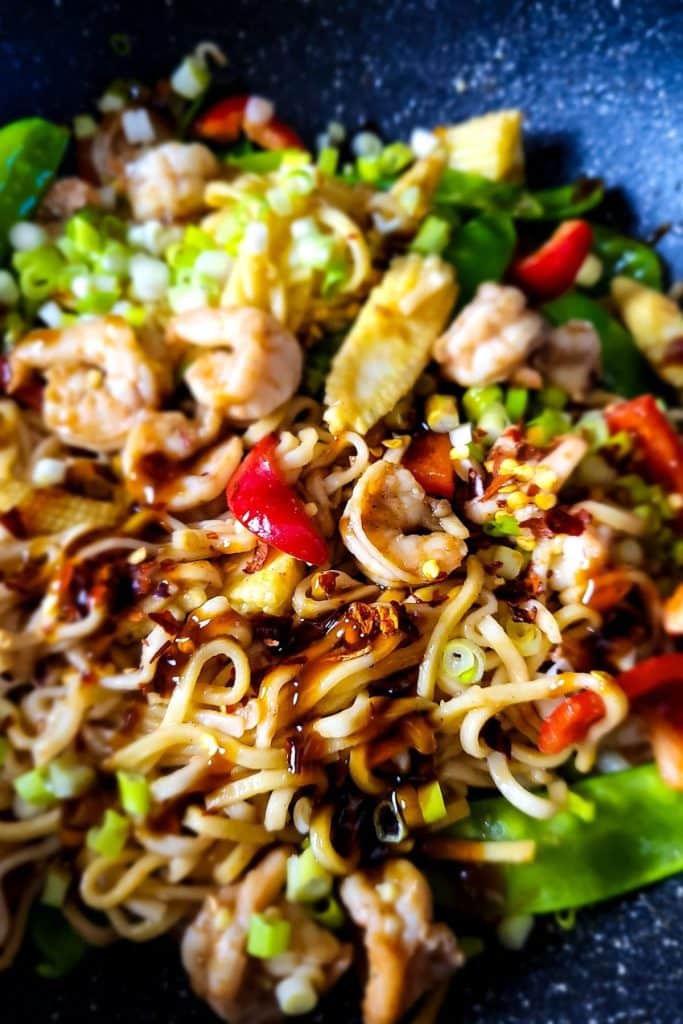
Top Tips
- Oil the noodles after draining. Toss the cooked, drained noodles with a teaspoon of sesame or neutral oil immediately after draining. This prevents them from sticking together in a clump while you build the stir-fry — a step most recipes skip, only to wonder why the noodles won’t separate in the pan.
- Don’t overcook the shrimp. They go from raw to done to rubbery in a matter of minutes. Watch for the moment they start turning opaque — that’s when you have to add veggies and other ingredients as you stir-fry.
- Get the garlic fragrant before anything else goes in. Thirty seconds in hot oil is all garlic paste needs. The moment it smells fragrant and slightly golden, move to the next step. Burnt garlic is bitter and ruins the base of the whole dish.
- Add the noodles last. Noodles in a hot pan absorb sauce quickly. Adding them too early means they soak up everything before the shrimp and vegetables are properly coated. Last in, toss quickly, serve immediately.
- Use a wide pan or wok. Lo Mein needs space to toss properly. A crowded pan steams the ingredients rather than frying them, and you lose the caramelization on the shrimp and vegetables that gives the dish depth.
- Serve the moment it’s done. Lo mein is at its best straight from the pan — the noodles are saucy and glossy, the shrimp are tender, and the vegetables still have crunch. It deteriorates quickly as it sits, and the noodles absorb the remaining sauce.
Substitutes and Variations
- Protein alternatives: Thinly sliced chicken breast or thigh replaces shrimp; cook for 4–5 minutes instead of 2–3. Firm or deep-fried tofu is a vegetarian option that absorbs hoisin sauce well. Scallops are an indulgent substitute; cook them the same way as shrimp, 2 minutes per side.
- Noodle alternatives: Udon for a chewier texture, rice noodles for a gluten-free version, soba for a nuttier flavor. All work with the same sauce and method.
- Sauce variations: Add a teaspoon of oyster sauce for extra depth. A drizzle of sesame oil stirred in at the very end adds a nutty finish that suits the five-spice well. A teaspoon of rice vinegar adds a subtle acidity that lifts the sweetness of the hoisin.
- Add heat: A teaspoon of dried chili flakes with the garlic paste, a spoonful of Korean red pepper paste (Gochujang) in place of some of the hoisin, or a drizzle of chili oil to serve, to create a different but tasty flavor.
- Add texture: Toasted sesame seeds scattered over the finished noodles add crunch and a nutty flavor. Crispy shallots on top work well, too.
- Make it saucier: Double the hoisin and soy sauce amounts for a wetter, more generously sauced lo mein. Add a splash of water to the pan with the noodles to help the sauce distribute evenly.
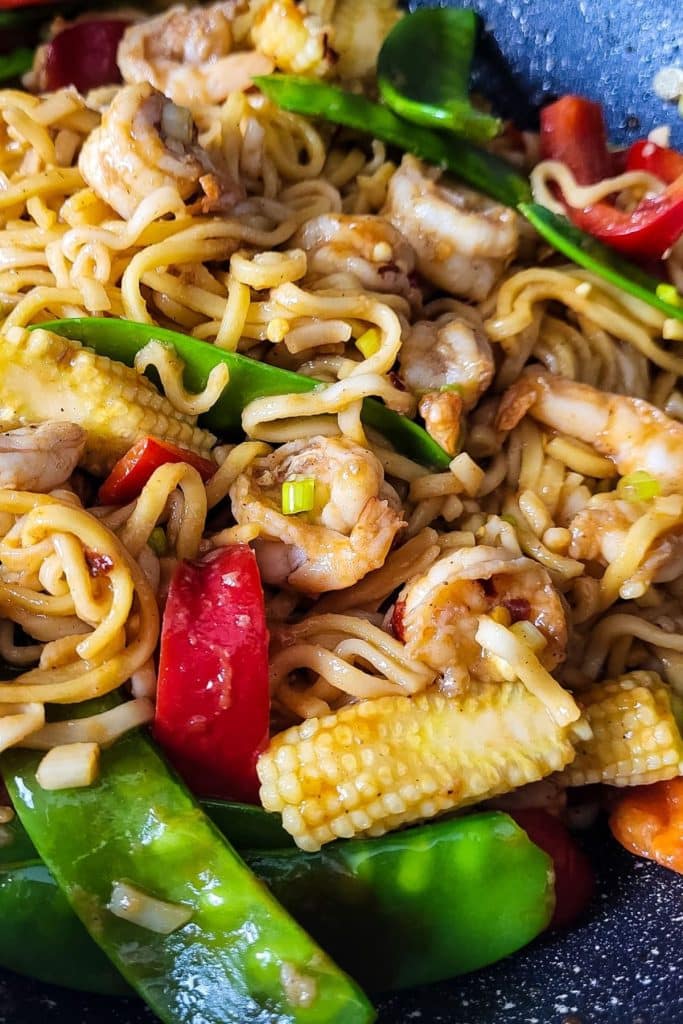
Storage Matter
Refrigerator: Store leftovers in an airtight container for up to 2 days. The noodles will continue absorbing sauce and may clump together in the fridge. Reheat in a pan over medium heat with a splash of soy sauce or water to loosen everything. If possible, avoid the microwave because it makes the shrimp rubbery and the noodles unevenly hard. Though I must admit, I sometimes do it in the microwave when I feel lazy.
Freezer: Not recommended. Cooked egg noodles and shrimp both lose texture significantly on freezing and thawing. The noodles become mushy, and the shrimp turn tough.
What to Serve With
- Chili oil on the table: for drizzling over the finished noodles. The heat and fragrance of a good chili oil with crispy bits take the lo mein from very good to excellent.
- Spring rolls, wonton or gyoza: alongside for a more substantial spread.
- Miso soup: a small bowl on the side adds warmth and simply rounds out the meal.
- Steamed pak choi with oyster sauce: a quick, simple green side that takes five minutes and keeps the Asian-inspired flavor profile consistent.
- Pickled cucumber: thinly sliced cucumber with vinegar and a pinch of salt refreshes the palate between bites of rich, saucy noodles and balances the sweetness of the hoisin glaze.
- Extra soy sauce and sesame seeds at the table: small additions that let people adjust the seasoning and texture to their own preference without changing the recipe itself.
FAQs
What noodles can I use instead of egg noodles?
Fresh udon noodles work well and give a thicker, chewier result. Rice noodles make this gluten-free and absorb the hoisin sauce slightly differently — still very good. Soba noodles add a nutty flavor from the buckwheat. Any noodle that can be boiled and tossed through a stir-fry sauce works here.
Can I use frozen shrimp for lo mein?
Yes. Thaw completely in cold water before cooking and pat dry with kitchen paper. Excess water from frozen shrimp steams the pan rather than allowing the shrimp to fry properly, which affects both texture and flavor.
What vegetables can I substitute in this shrimp lo mein?
Almost any quick-cooking vegetable works. Tenderstem broccoli, sliced mushrooms, pak choi, beansprouts, sugar snap peas, or shredded cabbage all suit the hoisin and five spice sauce. Keep the total volume of vegetables roughly the same and adjust cooking times — leafy greens like pak choi need less time than broccoli.
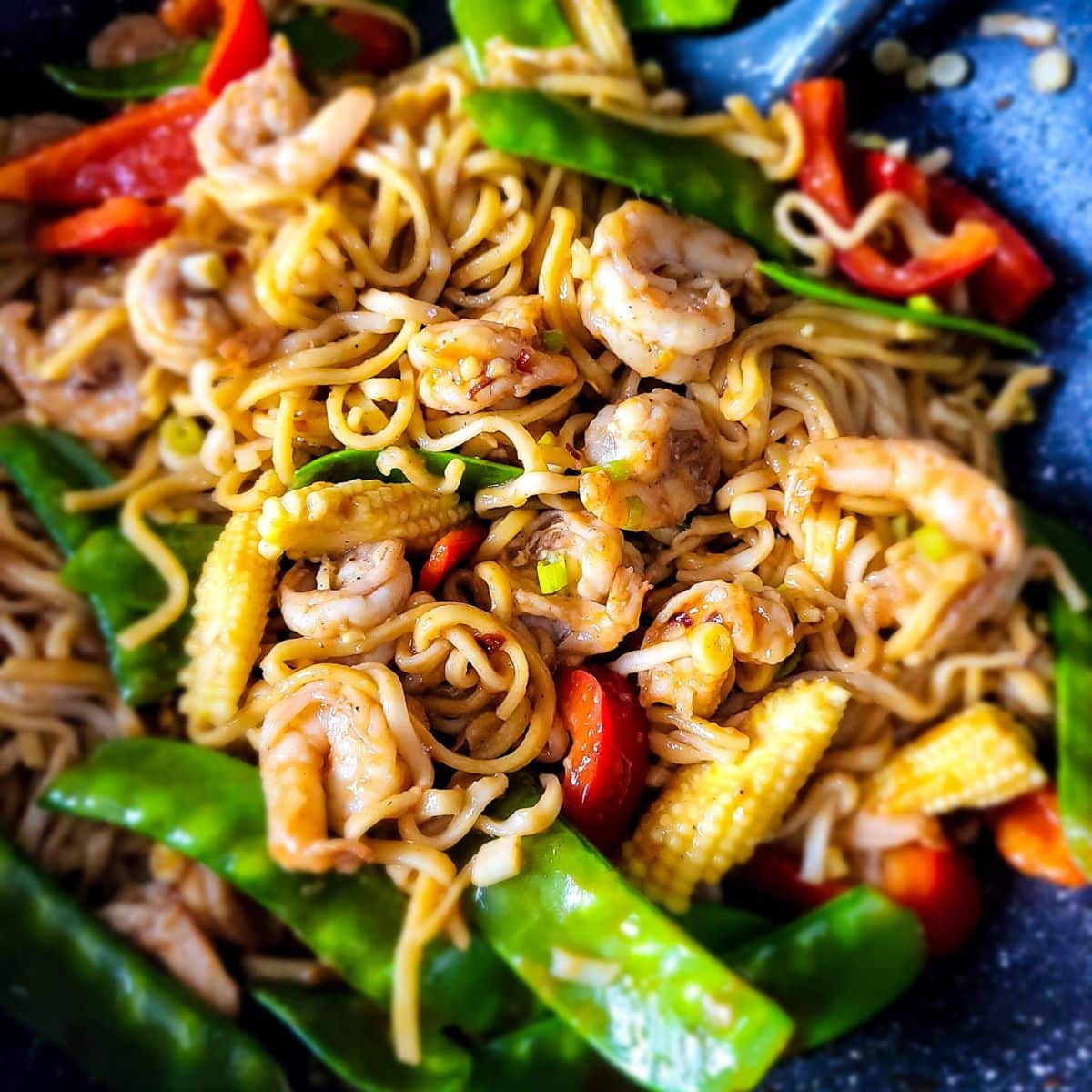
Shrimp Lo Mein Recipe
Ingredients
- 2 nests egg noodles approximately 6 ounces (170 grams)
- 6 ounces raw large shrimps, deveined
- 4 baby corns (baby sweetcorn)
- 1 cup snow peas (mangetouts)
- ½ red bell pepper
- 1 scallion sliced
- 2 tablespoons frying oil
- 1 tablespoon garlic paste
- 2 tablespoons hoisin sauce
- 1 teaspoon Chinese five-spice
- 1 tablespoon light soy sauce
Instructions
- Cook the noodles according to the package instructions. Drain and set aside.
- Build the flavor base by heating the oil in a skillet or wok over medium heat. Add the garlic paste and fry until fragrant — about 30 seconds, stirring constantly.
- Add the five spice and stir well to combine with the garlic. Cook for another 20 seconds.
- Cook the shrimp by adding them to the pan and stirring through the garlic and spice base. Cook for a minute, until the shrimp starts to turn opaque and pink. Do not overcook — they will continue to cook when the other ingredients are added.
- Add the vegetables — baby sweet corn, snow peas, and red bell pepper — and stir-fry for 2–3 minutes until slightly softened but still with crunch.
- Add the hoisin sauce and stir to coat the shrimp evenly.
- Add the soy sauce and stir through the pan.
- Toss in the noodles and mix everything together carefully until the noodles are evenly coated in the sauce and heated through.
- Finish and serve by scattering the sliced spring onion over the top. Serve immediately.
Notes
- Don’t overcook the shrimp. They go from raw to done to rubbery if it’s overcooked.
- Oil the noodles immediately after draining with a teaspoon of neutral oil to prevent them from sticking together in a clump while you build the stir-fry.
- Use a wide pan or wok to toss properly. A crowded pan steams the ingredients rather than stir-frying them.
Nutrition

Devy founded So Yummy Recipes to share her love of food after exploring various cultures and cuisines for more than two decades. Her mission is to help others easily recreate traditional and non-traditional food with readily available ingredients. Her works have been featured in Reader’s Digest, Al Jazeera, MSN, Yahoo, Bon Appétit, and more.