
Cilok Recipe: Chewy Tapioca Dumplings Balls

This post may contain affiliate links. Please check our disclosure policy.
Cilok are chewy, bouncy tapioca dumplings straight from the streets of Bandung, West Java. Small but mighty, these little bites have earned their place as one of Indonesia’s most beloved street foods.
The real star? That rich, spicy peanut sauce they’re dunked in. It’s the kind of combination that keeps you reaching for just one more.
What Is Cilok?
Cilok – pronounced as chee-lock – actually stands for a Sundanese phrase of Aci Dicolok, which means skewered tapioca. It is a savory street snack originally from Bandung, West Java.
I remember getting this snack after school when I lived in Bandung many years ago. In case you wonder, these are chewy dumpling balls made of tapioca flour. And you have them with a generous drizzle of spicy peanut sauce.
Here, I’m sharing a recipe that my sister gave me. With her permission, I tweaked it, adjusted some ingredient proportions, and used a slightly different cooking method.
This recipe offers a better taste and texture than the original Cilok that I remember.
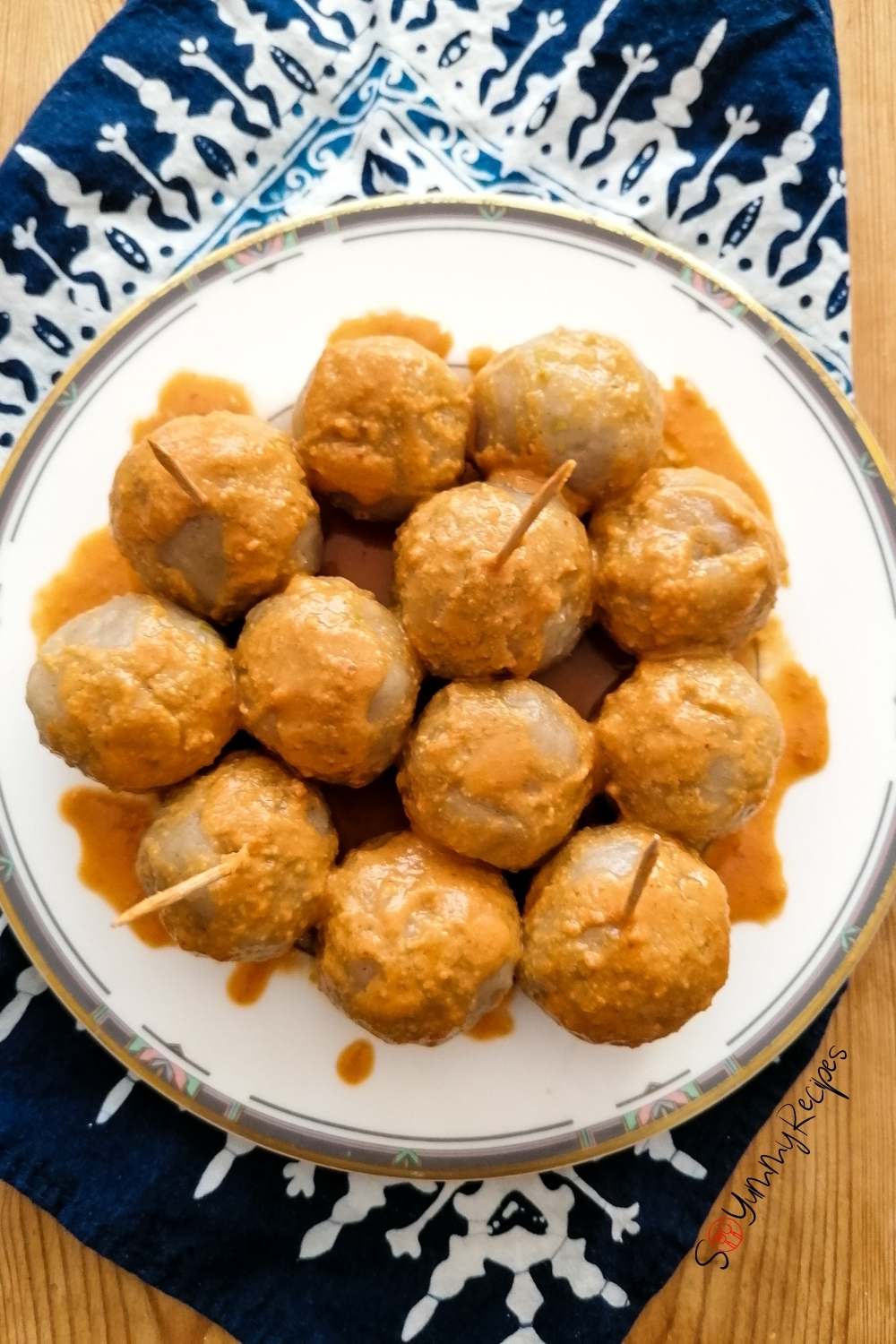
Maybe because it uses real chicken or fish to enhance the flavor. Because the original recipe uses stock powder. Also, the tapioca’s texture is not too rubbery or chewy. Plus, of course, you can always add the spices and herbs that you like to make them taste even better.
Forgotten Street Food From the Olden Days
I actually forgot about this humble street food until my sister reminded me.
So, the last few years have seen changes in the fate of those tapioca dumplings. Because apparently, Cilok is now quite popular. At least, it has won the hearts of people in Jakarta. And people try to modify the recipes into all styles.
Some add cheese in the balls, some add meat pieces, and of course, some also change the spices and flavor of the dumpling dough.
But here I’m sharing a recipe that is close to the original. It’s an improved version in terms of taste and texture. But everything else is pretty much the same as the traditional Cilok from Bandung.
Why You’ll Love Cilok
You may find the idea of these chewy snack balls a bit strange. But I urge you to give it a try for the following reasons.
- That signature chew. Soft, bouncy, and satisfying — the texture alone is worth trying.
- The peanut sauce is everything. Rich, spicy, and deeply flavourful. It transforms every single bite.
- Street food at its finest. No fancy restaurant needed. This is real, honest Indonesian food at its best.
- Incredibly easy to make. Simple ingredients, straightforward steps. Your kitchen can handle this.
- A taste of Bandung. Every bite carries the spirit of West Java’s most iconic food scene.
- Endlessly customizable. Adjust the spice, tweak the sauce, make it your own.
- Dangerously moreish. One is never enough. You’ve been warned.
Simple Snacks With Simple Ingredients
The original cilok uses very simple ingredients. They are plain flour, tapioca flour, stock powder, garlic, salt, and pepper. And to enhance the quality of this savory snack, I substitute the stock powder with a real boneless fish or chicken fillet. I also add spring onions to give extra flavor.
When it comes to the sauce, I simplified it by using peanut butter and shop-bought chili sauce. But you can always use real peanuts and real chilies (I include both sauce recipes).
What you’re after is spicy and savory peanut sauce with a slightly sweet taste.
Easy and Quick Way to Make Cilok
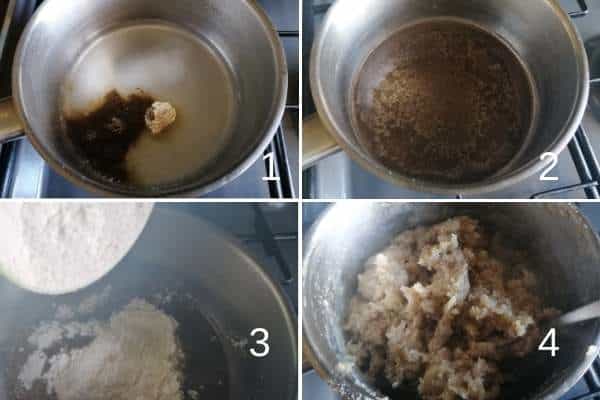
Essentially, you want to make the dough base by cooking the plain flour in hot boiling water seasoned with garlic, salt, and pepper. You mix them all until you get a glue-like paste. Place it in a mixing bowl.
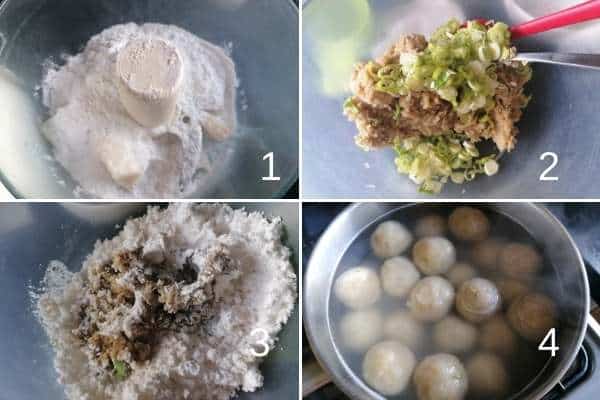
Then you process the tapioca flour and the fish/ chicken fillet in a food processor. If you don’t have a food processor, you can try to finely mince the fish/ chicken using a knife. And mix it with tapioca flour. You want the flour to feel like breadcrumbs, if not finer.
Next, you add the sliced spring onions to the plain flour mixture, then add the tapioca flour and the fish/chicken mixture little by little while stirring.
Keep mixing until all the ingredients are combined, and you get a smooth dough. Then shape the dough into small golf-ball-sized balls (or smaller).
Boil some water in a large pan, then add a tablespoon of oil.
Once the water is boiling, carefully place the dough balls in it and cook until they all float to the surface. When the dough balls rise to the surface, let them cook for at least 3-4 minutes. To ensure that your dumplings are fully cooked.
Pick the cilok using a slotted spoon, drain, and place them on a plate.
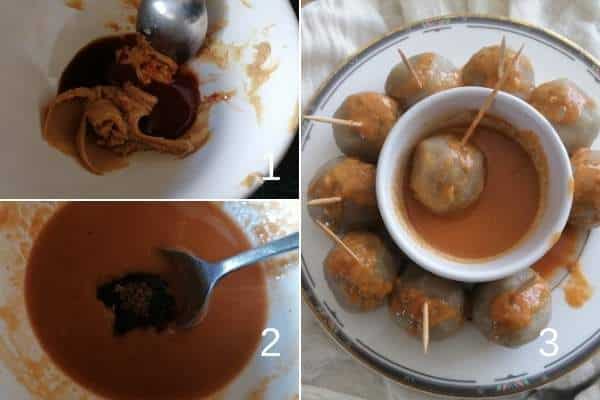
For the sauce, just mix all the ingredients until smooth and thick. If you use roasted/ fried peanuts, you can process all the ingredients in a blender and boil until the sauce is bubbling.
Related Recipes
Thank you for reading the post. I hope you’re now thinking of trying this Cilok recipe. When you do, it would be great if you could share your thoughts on the recipe in the comments below.
Please follow me on Facebook, Instagram, and/ or Pinterest to sneak a peek at what’s cooking in my kitchen.
Before you go, don’t forget to check out my other Indonesian street food snack recipes that you may like:
- Pangsit Ayam: Indonesian chicken wontons.
- Asinan Jakarta: Indonesian crispy salad with spicy peanuts and tamarind.
- Perkedel Tempe: Indonesian tempeh fritters.
- Rujak Serut: Indonesian sweet potato slaw with tamarind dressing.
- Ketoprak Jakarta: bean sprout and vermicelli salad with peanut sauce.
Thank you and all the best.

Cilok Recipe: Chewy Tapioca Dumplings Balls
Equipment
Ingredients
For the Cilok:
- 1 cup boneless fillet of fish or chicken. see the note.
- 1 cup plain flour/ all-purpose flour.
- 1 cup tapioca flour.
- 3 garlic cloves. minced. Or, 1 heaped teaspoon of garlic powder.
- 3 spring onions/ scallions. finely sliced.
- 2 teaspoons salt.
- ½ teaspoon ground black or white pepper see the note.
- 1 cup hot water. I use boiling water from the kettle.
- 1 tablespoon cooking oil. see the note.
For the sauce with peanut butter:
- ¼ cup peanut butter.
- 2 tablespoons chilli sauce. I use sriracha sauce. See the note.
- 1 teaspoon honey or brown sugar.
- Salt to taste.
- ¼ cup boiled water. or more if it’s too thick.
- Sweet soy sauce. optional.
For the sauce with roasted peanuts or deep-fried peanuts:
- 50 grams roasted peanuts. or fried peanuts.
- 2 red bird’s eye chillies. or 1 teaspoon red chilli powder (see the note).
- 1 clove garlic.
- Salt to taste.
- 1 tablespoon brown sugar or honey.
- ½ cup water.
- Sweet soy sauce optional.
Instructions
To make Cilok:
- Cut the fish or chicken in chunks.
- Place the fish/ chicken in a food processor together with tapioca flour. Process them until it’s smooth. Set aside.
- In a saucepan, cook the hot water with garlic, salt and ground pepper until it reaches boiling point.
- Add the plain flour into the water mix and stir well until all combined. You can turn the heat off. The flour mixture will be very sticky like glue. Don’t get disheartened. Just keep mixing until it all looks smooth with no lumps.
- Place the sticky plain flour mixture into a mixing bowl and add in the spring onions.
- Pour the tapioca and fish/ chicken mixture in little by little as you mix them. Keep mixing until all the ingredients are combined and you get a rather smooth dough.
- Take a tablespoon of mixture and shape it into a round ball (about 1.5 inches/ 3.8 cm in dia). If the dough is sticky, use two spoons to work and shape the dough. Don’t worry if it’s not perfectly round. Work until all the dough is shaped into small balls.
- At the same time, boil some water (approx. 1.5-2 litre) in a large pan and add 1 tbsp of oil.
- Once the water is ready and boiled, carefully drop the dough balls in it. Do not overcrowd the water with too many dough balls at a time. Because the dough balls will slightly rise and plump up as they are cooking. So make sure you give enough space in between those dumplings. Let them cook until they come upon the surface. Then leave them to further cook for at least 3-5 minutes to ensure they’re thoroughly cooked before you pick them up with a slotted spoon.
To make the sauce with peanut butter:
- Place the peanuts, chilli sauce, salt and honey/ sugar in a bowl. Using a fork or a small whisk, add in the water little by little as you stir/ whisk the ingredients.
- Keep mixing until all is smooth. You can add more water if the mixture gets too thick. I prefer the heavy cream consistency. Check the taste. You may want to add the chilli sauce or salt according to your taste. I like my sauce to be savoury and spicy.
To make the sauce with roasted/ fried peanuts:
- Place the peanuts, chillies, garlic, salt and sugar/ honey in a blender. Add the water in and process the blender until you get a nice thick sauce. You can add more water if you find the mixture is too thick. I prefer double cream consistency.
- Put the mixture in a saucepan. Cook it until it’s boiling and simmering for 3 minutes. Check the taste and make sure it’s spicy, savoury with a little hint of sweetness.
To serve:
- Put the Cilok on a small dish or a bowl. Pour the peanut sauce over and drizzle some sweet soy sauce (if you use it) according to your taste. You can use a toothpick to eat these Cilok. Like the olden days.
Notes
- You can use any boneless white flesh fish such as basa, haddock, cod, hake, halibut, etc. If you prefer, you can also use skinless and boneless chicken.
- Ideally, we use ground white pepper, but really, ground black pepper is good enough to make these chewy tapioca dumpling balls.
- You can use any type of cooking oil to put in the boiling water. The idea is to prevent the tapioca balls from sticking one to another due to the sticky starch of tapioca flour. Vegetable oil, sunflower oil, rapeseed oil, etc. are some of the good choices.
- Use any chilli you have. Either fresh chillies or dried chilli powder is good. Put more or less chilli according to your taste.
- You can use any chilli sauce you like. I often use Indonesian chilli sauce or sriracha sauce.
Nutrition

Devy founded So Yummy Recipes to share her love of food after exploring various cultures and cuisines for more than two decades. Her mission is to help others easily recreate traditional and non-traditional food with readily available ingredients. Her works have been featured in Reader’s Digest, Al Jazeera, MSN, Yahoo, Bon Appétit, and more.