Ayam Goreng Bumbu (Indonesian Fried Chicken)

This post may contain affiliate links. Please check our disclosure policy.
I first made this Indonesian ayam goreng years ago when I was missing my mum’s fried chicken. It was a simple lunch, nothing planned, just that craving for something familiar and comforting. I remember standing in the kitchen, working through garlic, turmeric, and galangal, hoping it would come close, and it did, in its own way.
What I love about this Indonesian fried chicken recipe is how practical it is: no complicated steps, just real ingredients and time to let the flavors soak in. It’s the kind of meal that brings you back to something familiar, even if the flavors take you somewhere new. It is not just an ordinary fried chicken. It’s a traditional fried chicken from Indonesia that, when properly cooked, tastes flavorful right to the bone.
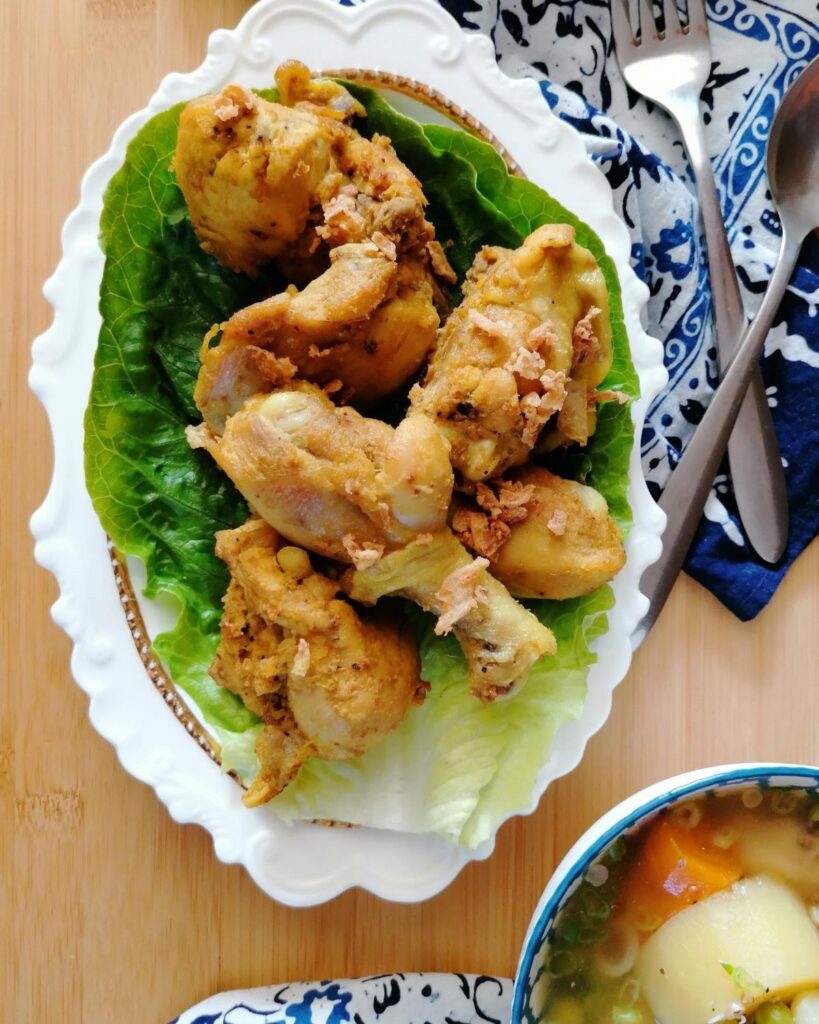
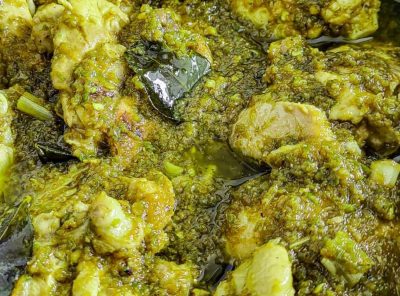
Unlike the western fried chicken, Ayam Goreng Bumbu must be pre-cooked in spices before frying. Therefore, you will not have to worry about reaching a specific oil temperature when cooking your poultry. And you don’t have to worry about the uncooked chicken, since you cook it twice.
Almost all of Indonesia’s regions have their own way of making spiced fried chicken. But the one I’m sharing with you here is the recipe from West Java, where the Sundanese are from.
My mom is Sundanese, so I grew up eating Sundanese-style fried chicken. In the West Java region, you’ll find Ayam Goreng in literally every eatery.
As with any dish, there are many versions of Ayam Goreng. Here, I’m biased by including my mom’s recipe and claiming it’s the best.
But in seriousness, everybody who has tried my mom’s fried chicken has loved it. Recently, one of my cousins, who runs a catering business, told my mom that she now uses this fried chicken recipe and gets positive feedback from her customers.
Why You’ll Love This Fried Chicken
- The flavor goes beyond the surface. Unlike standard fried chicken recipes, ayam goreng is marinated and simmered in a rich spice paste (bumbu), so every bite carries bold Indonesian flavors like lemongrass, galangal, and salam leaf.
- You get that golden, crispy skin without heavy batter. It’s a lighter, more natural crisp, which makes this Indonesian fried chicken recipe feel less greasy and more satisfying.
- It’s surprisingly practical for home cooking. I can prep the chicken ahead, let it absorb the spices, and fry it quickly when I’m ready, perfect for weeknight meals or relaxed weekend cooking.
- This recipe uses simple, whole ingredients. No complicated sauces, just fresh, fragrant, and pantry spices that create a clean, honest flavor.
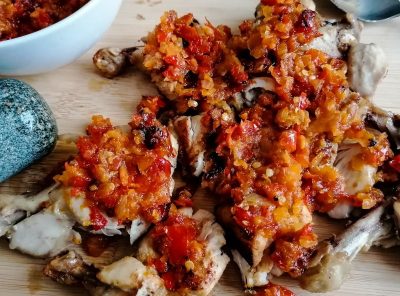
- It pairs with everything. I often serve it with steamed rice, sambal, and a simple cucumber salad, and it becomes a balanced Indonesian meal that feels both comforting and fresh.
- It keeps well and tastes even better the next day. I’ve packed leftovers for lunch, and the flavors deepen overnight, making it one of my favorite make-ahead Indonesian chicken dishes.
- You can easily adjust the spice level. I like adding extra sambal for heat, but you can keep it mild and still enjoy that rich, savory profile.
- It connects you to traditional Indonesian cooking. Making ayam goreng at home gives you a real sense of how slow cooking and simple spices can create something far more satisfying than fast food.
- If you’re searching for an authentic ayam goreng recipe that’s both approachable and packed with flavor, this one delivers without overcomplicating your time in the kitchen.
The Spices That You Need to Make Ayam Goreng Bumbu
- Garlic: Pound the garlic into a smooth garlic paste. If you run out of fresh garlic, use 2 teaspoons of garlic powder in this recipe.
- Coriander: You can use ready-made ground coriander or freshly grind the 3 teaspoons of whole coriander seeds.
- Turmeric: In Indonesia, fresh turmeric root is used for cooking. If you can use fresh turmeric, you need about 1 inch of it for this recipe. Peel and grind the turmeric with other spices. If you can’t get the fresh one, you can use ½ teaspoon of dried turmeric powder.

- Kemiri (Candlenuts): This spice is actually a type of nut used for cooking and not to be eaten raw. Often, people use Macadamia nuts as a substitute because they both have high oil content and the same texture when ground.
- Galangal: You must put the right amount of this root in your food, or its smell will be overpowering. You can use fresh Galangal or a ready-paste one. One teaspoon of Galangal is enough for this recipe if you use the paste.
- Salam leaf: often called the Indian or Indonesian bay leaf. However, it differs from the bay leaf, as it is from an unrelated plant family. The salad leaf is a Syzygium polyanthum plant, while the bay leaf is Lurus Nobilis. The smell of both types of leaf is distinguishably different, too. So I suggest you skip the salad leaf if you can’t get hold of it. Don’t substitute with bay leaf because it won’t suit the rest of the spices and herbs.
- Lemongrass: This herb gives the dish a refreshing citrus fragrance. In Indonesia, lemongrass is almost always used with salam leaf in many dishes.
- Salt and sugar: It is obvious that salt is the principal ingredient for tasty, savory food. But adding a little bit of sugar can enhance the flavor when you cook red or white meat. Therefore, we put a teaspoon or two of granulated sugar in this recipe.
- Cooking Oil for Deep Frying: You can use any neutral oil, vegetable, or sunflower.
How to Make Indonesian Fried Chicken
Allow me to suggest you pierce your chicken pieces before cooking. If you’ve read my other meat recipes, I always recommend this.
The reason is that you want to make sure your meat is flavourful inside and out, not just on the outside. You can try this and see if there’s any difference.
Anyway, you can make your spice paste once you’ve got your chicken pieces ready and pierced them. If you have a food processor, you can put all the spices and herbs (except the salam leaf) along with salt and sugar in it. Give it a blitz until everything is smooth, like paste. Or you can use a mortar and pestle to grind all the spices.
Then, you put the chicken pieces in a cooking pot and add the spice mixture and salam leaf (if using). Give it a stir or two until all the chicken pieces are coated with the spice.
Put the lid on and cook the poultry over low heat until cooked. If your chicken releases a lot of water/ juice, you may want to open the lid to help the moisture evaporate slightly. Or turn the heat up a bit. But do take care so that the meat won’t get burned.
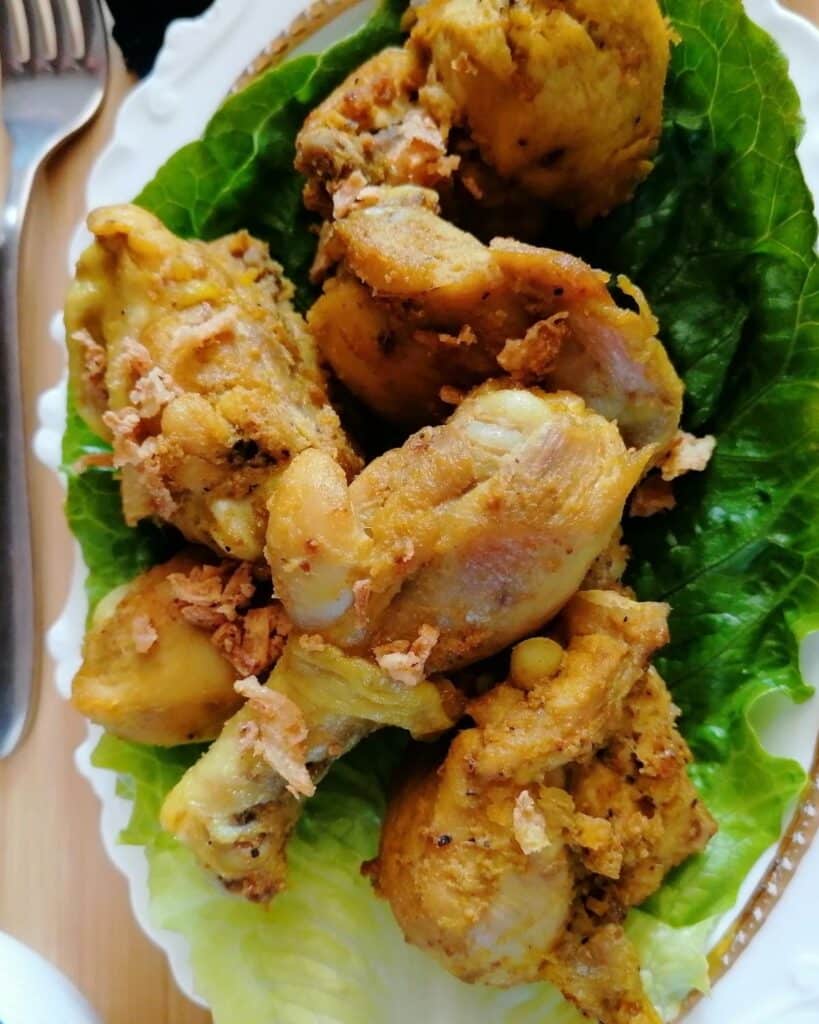
Once your chicken is thoroughly cooked, with a nice, thick layer of spice left on it, you can get your frying pan ready and start heating the oil.
Deep fry the chicken until lightly golden or light brown. I prefer it light golden because it means the meat is not dry.
What to Enjoy Ayam Goreng Bumbu With
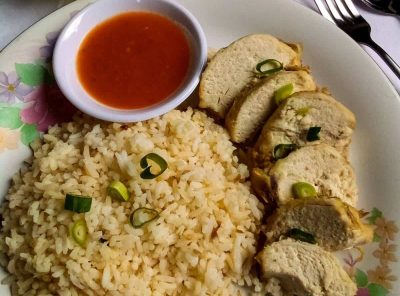
Traditionally, Indonesians enjoy this spiced fried chicken with rice and other side dishes, such as vegetable stir-fry or soup.
And finger foods such as vegetable fritters are popular companions. You can try sweetcorn fritters or mung bean fritters.
For special occasions such as Eid-ul-Adha and Eid-ul-Fitr, many Indonesians will have Ayam Goreng Bumbu as a companion to Lontong Sayur (a vegetable curry in coconut milk with hard-boiled rice cakes called lontong), along with Beef Rendang.
But really, you can enjoy your fried chicken with whatever you like. I often eat it with salad or gado-gado (Indonesian salad with peanut sauce).
Make in Bulk and Keep for Another Day
There’s nothing that I love more than cooking something that I can store and keep for when I don’t have time to cook.
Now, this fried chicken is one of those.
You can freeze and store the fully fried chicken, then reheat it in the oven when you need it. My favorite way is to cook the chicken thoroughly with spices, then let it cool before I store it in my freezer. When I need it, I can leave it to thaw in the fridge the night before I fry it.

Ayam Goreng Bumbu – Indonesian Fried Chicken
Equipment
- Slotted spoon
Ingredients
- 1.3 lbs chicken cut in pieces.
- 5 cloves of garlic.
- 2 teaspoons ground coriander.
- ½ teaspoon turmeric powder.
- 6 candlenuts/ Kemiri optional
- ½ inch galangal.
- 2 salam leaves optional.
- 1 lemongrass.
- 1 teaspoon salt.
- 2 teaspoons sugar.
- Cooking oil for deep frying.
Instructions
- Clean and cut the chicken into pieces as desired.
- Grind the garlic, candlenuts/ Kemiri, and galangal into a paste.
- Put the chicken pieces in a cooking pan.
- Add in all the spices and the herbs. Give a stir until all the pieces are coated with spices.
- Put the lid on and turn to high-medium for about 5 minutes until you hear the sound of cooking. Then turn the heat to low to cook further for about 30 minutes.
- Keep checking and stirring the chicken every now and again, you don’t want it to burn at the bottom. I do it about 2-3 times until the poultry is cooked.
- Heat the cooking oil in a wok or a deep frying pan.
- Fry the chicken pieces until lightly golden.
- Enjoy.
Notes
- If you can not get hold of Kemiri (Candlenuts), you can use Macadamia nuts. And if you can’t get either of them, you can skip altogether.
- Salam leaf has a unique fragrance that I don’t recommend substituting it with any other herb. If you can’t get Salam leaf, you may just want to leave it and cook your chicken without it.
Nutrition

Devy founded So Yummy Recipes to share her love of food after exploring various cultures and cuisines for more than two decades. Her mission is to help others easily recreate traditional and non-traditional food with readily available ingredients. Her works have been featured in Reader’s Digest, Al Jazeera, MSN, Yahoo, Bon Appétit, and more.