Bubur Ayam (Indonesian Chicken Rice Porridge)

This post may contain affiliate links. Please check our disclosure policy.
Bubur Ayam is a classic Indonesian chicken congee that’s known for being both comforting and practical to make at home. I started cooking it on slow mornings when I wanted something warm but not heavy, and it quickly became one of my go-to meals.
Bubur Ayam for Delicious Breakfast
This chicken rice porridge is one of the most sought-after street foods and a comforting breakfast in Indonesia. You can easily find the food gawker selling this chicken rice porridge all over the country.
The rice cooks down into a smooth, silky porridge infused with chicken and simple aromatics, then topped with sweet soy sauce, chili sauce, and crispy garnishes. This easy Bubur Ayam recipe uses everyday ingredients yet delivers the balanced, savory flavor you’d expect from Indonesian street food. It’s a reliable option whether you’re making a quick breakfast, a light lunch, or something soothing at the end of the day.
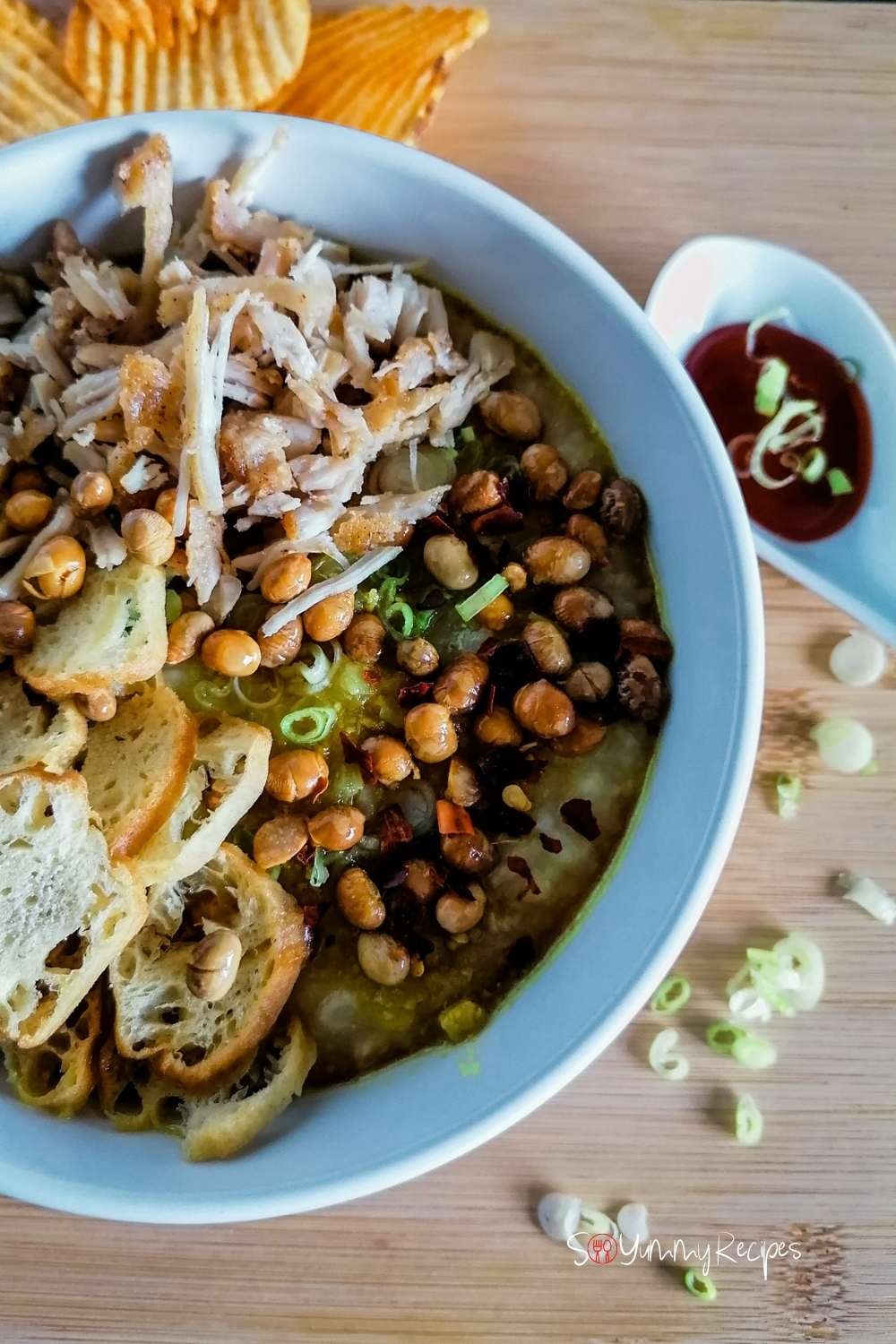
With its delicate herb fragrance, the soft rice congee marries well with flavorsome spiced yellow sauce, soy sauce, and chili sauce. One can never have enough of this humble yet full-of-texture rice dish.
You will enjoy this simple rice porridge with shredded chicken, fried soya beans, Cakwe slices, spring onions, and Kerupuk.
If you want to make simple bubur ayam, you can just make this rice congee, the sauce, and the shredded chicken.
Why You’ll Love Bubur Ayam
- It’s one of the most comforting Indonesian breakfast recipes, with soft rice porridge that’s warm, light, and easy to eat any time of day.
- The flavor builds in layers. Mild, savory congee meets sweet soy sauce, chili sauce, and aromatic herbs for a balanced, satisfying bowl.
- I like how adaptable it is—you can keep it simple or add toppings like shredded chicken, fried shallots, or crispy crackers depending on what you have.
- It’s a practical way to use leftover chicken, turning it into a completely new meal without extra effort.
- The texture is what makes it stand out. Smooth, silky porridge contrasts with crunchy toppings, so every bite feels different.
- This authentic Bubur Ayam recipe uses simple ingredients but delivers a depth of flavor that makes it seem like it took much longer to make.
- It’s naturally gentle on the stomach, making it perfect for slow mornings or when you want something nourishing but not heavy.
- You can easily adjust the taste—add more soy for sweetness or chili for heat, depending on your mood.
- It brings a bit of Indonesian street food culture into your kitchen without complicated steps or hard-to-find ingredients.
- It works beyond breakfast. I’ve had it for lunch and even light dinners when I want something warm and filling without feeling weighed down.
Adjustable Ingredients
Although there are typical elements in many recipes, you can make Bubur Ayam in so many ways and enjoy it with so many different things.
You may find the dish is slightly different from one region to another. But one thing is for sure: every Bubur Ayam has rice congee and shredded chicken.
To make the rice porridge, you can use any type of rice, such as Basmati, Thai, short-grain, or long-grain rice.
The difference is that high-starch rice, such as Thai and short-grain rice, makes stickier rice porridge with a creamier taste.
What makes this Indonesian chicken porridge delightful to enjoy is the flavorful sauces and the variety of garnishes that accompany the plain rice congee.
Most Bubur Ayam across Indonesia will have yellow spiced sauce and light soy sauce. It will be topped with fried soya beans, shredded chicken, Cakwe slices, and some rice crackers (Kerupuk).
However, some sellers put a raw egg yolk between the piping-hot rice congee, and others put slices of hard-boiled egg.
So, feel free to try any of those varieties if you like.
How to Make Indonesian Rice Congee
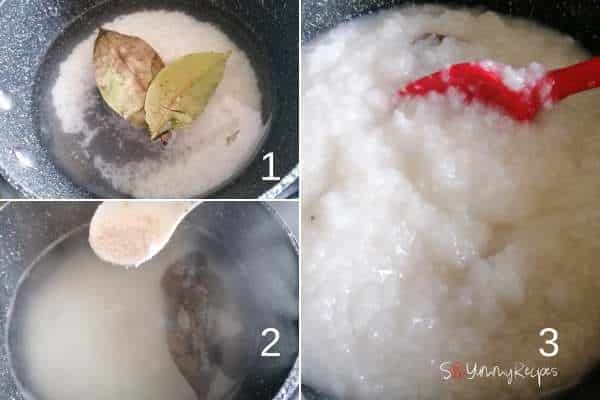
Making the rice porridge itself is easy and doesn’t take much time. You just boil the rice in plenty of water with some herbs and salt.
However, to enjoy rice congee as Bubur Ayam, you will need to prepare, at a minimum, the yellow spiced sauce, shredded chicken, and Cakwe. These are the usual elements for Indonesian chicken rice porridge.
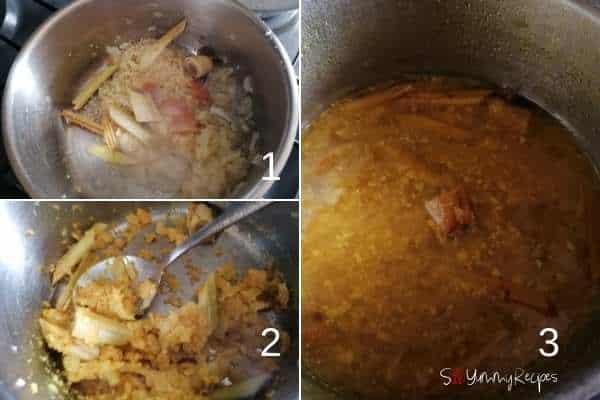
For the sauce, you only need to pound the spices and cook the paste with some water until it is bubbling and simmering.
Technically, you can use any cooked chicken for the shredded chicken. Sometimes, I use Indonesian fried chicken, Ayam Goreng Bumbu, and other times, I use leftover roast chicken. I include instructions for cooking the chicken the simple way in this recipe, in case you need them.
You can also try making Cakwe yourself by following my easy Cakwe recipe. Granted, you will enjoy it for your snacks too.
Top Tips for The Most Delicious Rice Porridge
- Add the salt to the rice when the water reaches a boil. Otherwise, it will take longer for the water to boil.
- When the rice grains are fully cooked, stir the porridge as often as possible. The more stirring we do, the creamier our congee will be.
- If you don’t have salam leaves, you can substitute with 3 curry leaves and 1 bay leaf. The fragrance will not be the same, but it slightly resembles.
Related Recipes
Thank you for checking this Bubur Ayam recipe. I hope you’re planning to try now. When you do, please share your thoughts in the comments below.
Please follow me on Facebook, Instagram, and/or Pinterest to see what’s cooking in my kitchen.
Before you go, don’t forget to check out my other Indonesian food recipes for breakfast.
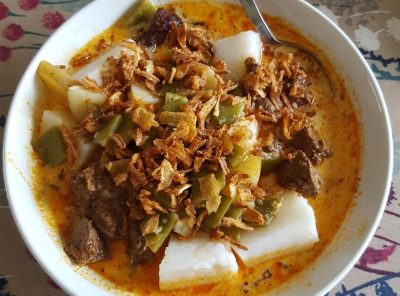
- Lontong Sayur Betawi: hard-boiled rice with vegetable curry.
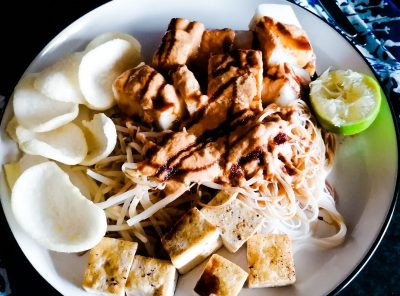
- Ketoprak Jakarta: bean sprouts, vermicelli, and tofu salad with peanut sauce.
- Bubur Kacang Hijau: Indonesian mung bean dessert with coconut milk.
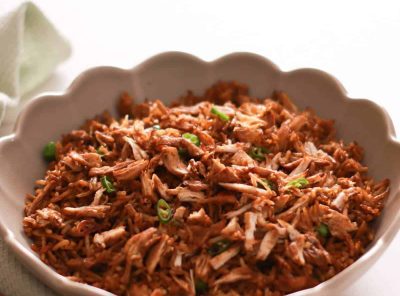
- Nasi Goreng Tuna: Indonesian tuna fried rice.
- Nasi Goreng Seafood: Indonesian seafood fried rice.
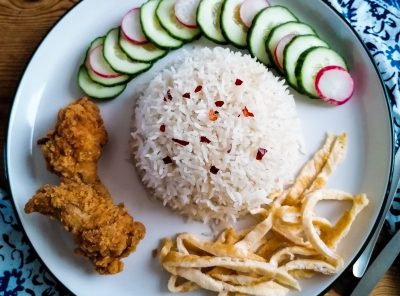
- Nasi Uduk Jakarta: rice cooked in fragrant coconut milk.

Bubur Ayam Recipe: Indonesian Rice Porridge With Chicken
Equipment
- Knife
- Slotted spoon
Ingredients
For making congee/ rice porridge:
- 1 cup rice see the note.
- 6 cups water.
- 2 salam leaves see the note.
- ½ – inch ginger.
- 1 lemongrass.
- 1 ½ teaspoons salt see the note.
For making congee using leftover rice:
- 1 ½ cup packed cooked rice.
- 5 cups water.
- 2 salam leaves see the note.
- ½ – inch ginger.
- 1 lemongrass.
- 1 ½ teaspoons salt see the note.
For the yellow sauce:
- 1 small onion finely chopped.
- 4 garlic chopped.
- ½- inch ginger peeled and chopped.
- 5 Kemiri/ candlenuts see the note.
- ¼ teaspoon turmeric powder see the note.
- 1 teaspoon ground coriander.
- 1 lemongrass.
- ½ teaspoon salt or according to taste.
- 1 teaspoon sugar.
- 1 cup water.
For the garnish:
- 300 boneless chicken.
- ½ – inch ginger.
- ½ teaspoon peppercorns.
- ½ teaspoon salt.
- ½ cup soya beans.
- Cooking oil.
- 3 pieces Cakwe.
- 2 scallions/ green onions/ spring onions
- Prawn crackers or potato crisps see the note.
Spices and condiment:
- Ground pepper. either white pepper or black pepper.
- Dried red chilli flakes optional.
- Light soy sauce.
- Sweet soy sauce optional.
- Chilli sauce/ sambal optional.
- Fried onions optional.
Instructions
For the congee:
- Place the rice/ cooked rice in a large pan with salam leaves, ginger, lemongrass, and water. Turn the heat on and boil the rice at medium-high heat.
- Once the water boils, add in the salt. Cook further and stir the rice every now and again.
- Turn the heat down when the rice is bubbling hot and continue simmering the rice porridge until you get a thick porridge. When the grains are fully cooked, keep stirring the congee until you get a nice creamy porridge. Set aside.
For the yellow sauce:
- Using a pestle and mortar, pound the onions, garlic, ginger and candlenuts until you get a smooth paste. You can also use a food processor to make this paste.
- Heat 2 tablespoons of oil in a saucepan, then add in onion mixture, turmeric powder, ground coriander, salt and sugar. Fry further until the mixture releases the aroma, then add the water in.
- Cook the sauce until it is bubbling. Check the taste, and set aside.
For the garnish:
- Cut the chicken into 1-inch cubes and boil them with ginger, peppercorns and salt until the poultry is fully cooked. Drain the chicken and deep fry until it looks lightly golden. Shred the fried chicken into slivers and set aside.
- Soak the soya beans for half an hour or so. Drain the water and deep fry the beans until they are lightly golden and crispy. Set aside.
- Slice the Cakwe and set aside.
- Slice the spring onions and set them aside.
Assemble the Bubur Ayam:
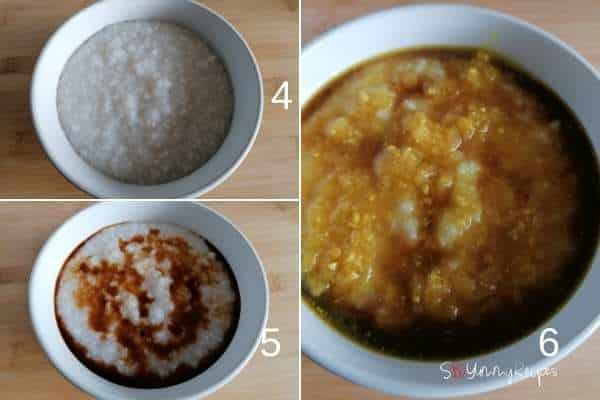
- Ladle out some rice porridge into a bowl.
- Put some light soy sauce and yellow sauce over the congee.
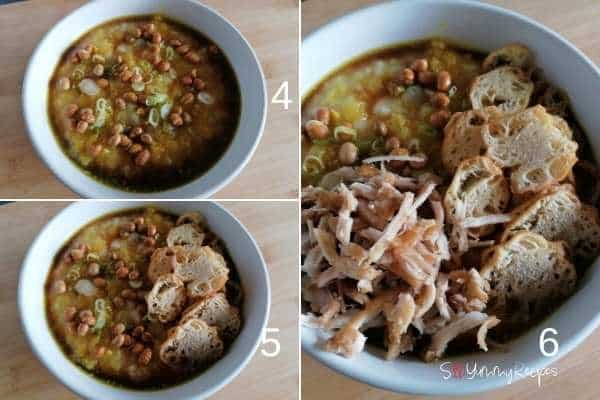
- Sprinkle some spring onions and fried onions (if using).
- Scatter some fried soya beans over the porridge.
- Add some Cakwe slices and shredded chicken.
- Enjoy your bubur ayam with some prawn crackers or Kerupuk, and chilli sauce.
Notes
- You can use any type of rice. I often use Basmati rice as this is the rice that I always have in my pantry. But you can choose long-grain rice, short-grain rice, or Thai rice.
- If you don’t have salaam leaves, you can substitute them with 3 curry leaves and 2 bay leaves. I find the mix of these two leaves gives a similar fragrance. Though not quite the same as salam leaf.
- Add the salt according to your taste. I suggest you put less first and try adding if you need more.
- You can buy ready-made cakwe/youtiao or make your own cakwe
- Kemiri can be substituted with Macadamia nuts. They give richness to the flavor. If you don’t have any of them either, you can omit them altogether.
- You can use fresh turmeric. For this recipe, you will only need about 1/3 inch of fresh turmeric root. If you use the fresh one, pound it together with the onion mixture.
- Traditionally Indonesians enjoy Bubur Ayam with Kerupuk (prawn crackers). But I often replace them with potato crisps, and they work fine, if not better. So feel free to try or have it with any cracker items that you like.
Nutrition

Devy founded So Yummy Recipes to share her love of food after exploring various cultures and cuisines for more than two decades. Her mission is to help others easily recreate traditional and non-traditional food with readily available ingredients. Her works have been featured in Reader’s Digest, Al Jazeera, MSN, Yahoo, Bon Appétit, and more.